 Dali Marketers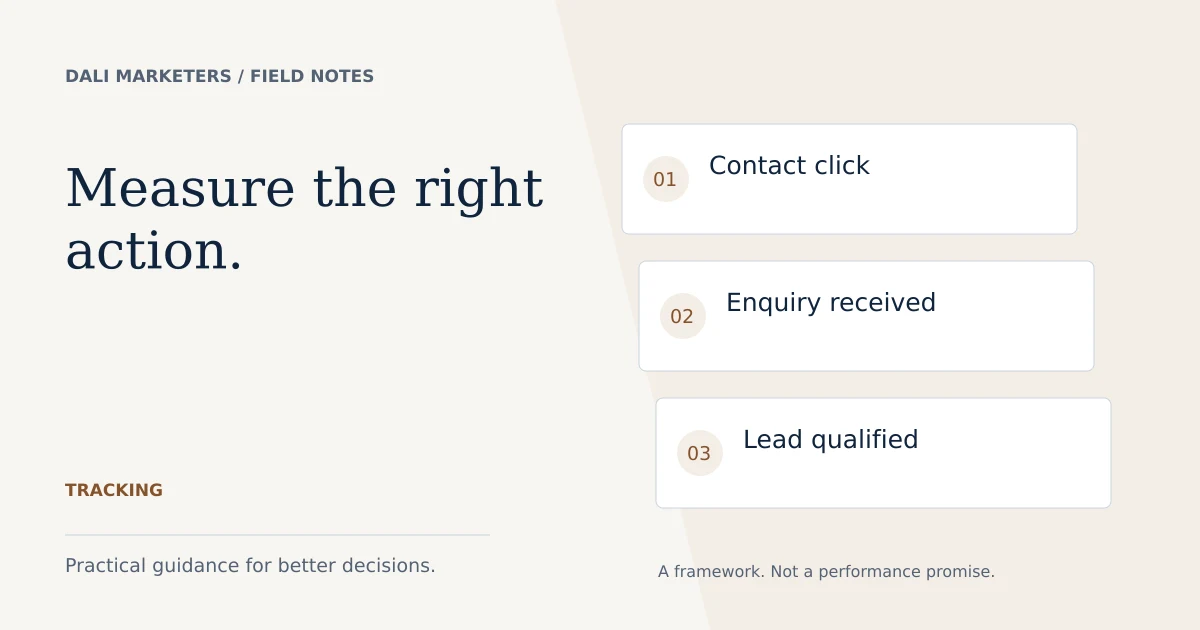
The quick answer
A click on a WhatsApp or phone link is an intent signal. It does not confirm that a message was sent, a call connected or a lead qualified.
Map the customer journey before adding tags
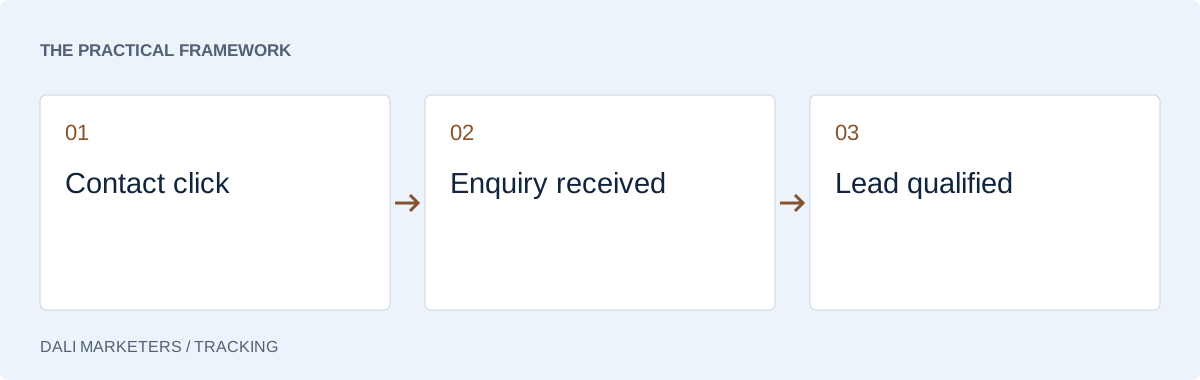
Google Ads conversion tracking should reflect the actions that matter to your business. Start with a short event map: a visitor clicks an ad, reaches a service page, submits an enquiry and eventually becomes a customer. Identify which stages the website can observe and which happen in your inbox, telephone system or CRM.
This prevents a common reporting mistake: calling every contact-button click a lead. On a site using a standard WhatsApp link, the website sees the link click. It cannot automatically know whether the visitor sends the message or books your service.
Write plain names for each event so a report reader can understand its meaning without opening the tag configuration.
Choose meaningful primary goals
Review the goals selected by each campaign. Primary actions usually contribute to bidding when their standard goal is selected. Secondary actions normally support observation, but actions inside a custom goal can be used for bidding even when labelled secondary.
Keep a clear distinction between an engagement event and a completed business action. If you track a form submission both with a Google Ads tag and an imported analytics event, check whether both are being counted toward the same campaign objective.
Do not add a monetary value simply to make a report look more useful. Use a defensible valuation method or leave the value unset where appropriate.
Test success and failure conditions
Make a successful test submission, then test an incomplete form and a failed request. The conversion should correspond to success, not merely pressing the submit button. Check what happens when someone refreshes the confirmation page or returns to it later.
Use Tag Assistant to inspect the event, destination ID and label. The diagnostic tool can show whether a tag fired, but that alone does not prove that the enquiry reached your team. Confirm the matching record in your inbox or CRM.
For purchases, review transaction identifiers and values. For lead generation, check your counting settings and avoid inflating results through repeated activity from the same ad interaction.
Check calls and messaging separately
| Signal | What it tells you | What it does not prove |
|---|---|---|
| Phone-link click | The visitor selected the call link | A connected or qualified call |
| WhatsApp-link click | The visitor opened the messaging route | A sent message or completed sale |
| Successful form event | The website accepted the submission | Commercial suitability |
| Qualified lead record | Your team assessed the enquiry | A completed purchase |
Call measurement options depend on country, account eligibility and the tools used. Confirm availability before promising full call attribution. If you rely on manual records, keep their limitations visible in reporting.
Reconcile reports with business records
Take a sample of real enquiries and compare dates, sources and status with your reporting. Investigate repeated submissions, spam and missing records. Allow for conversion delay and differences in attribution rather than expecting each platform’s daily totals to be identical.
Keep a simple log with enquiry date, service, source when known, qualification status and outcome. Avoid collecting personal details that you do not need. This log helps reveal whether a reported improvement is also visible in the business.
If enquiries exist but Ads reports none, work through the tracking issue before deciding that the campaign failed.
Respect consent and test after website changes
Consent choices can affect what is measured. Check that your implementation behaves as intended before and after permission is given, and that visitors can change their preference. Do not treat a consent-related reporting gap as a reason to ignore those choices.
Repeat the core tests after changing a form, website theme, domain, checkout or tag container. Keep a record of the tested journey and date. A successful test six months ago does not establish that today’s form still works.
When the business has a reliable lead qualification process, investigate whether an appropriate offline measurement setup can return those outcomes to Google Ads. That needs careful configuration and suitable handling of customer data.
Know when the account is ready for optimisation
Your goal is not a dashboard full of conversion actions. It is a small set of clearly defined outcomes that the business understands and can verify. Resolve duplicate or misleading events before using their data to justify larger budgets.
If you need help distinguishing a campaign issue from a measurement issue, our Google Ads audit service includes a tracking review. Pair it with the guide to improving lead quality when the next challenge is turning enquiries into suitable customers.
Sources & further reading
Platform details checked against these Google resources on 23 September 2026. Examples and diagnostic frameworks are explanatory; account results will vary.